
Reviewed · WALKING TOURS IN ROME
Private Walking Tour of the Squares and Fountains in Rome
Rome’s best squares fit into one walk. This private route strings together some of central Rome’s most recognizable plazas and fountains, with an English guide to help you spot what matters as you move. You’ll love the private format and the chance to focus on the city right where life is happening.
I also like that most stops are free to enter, so you spend your money on the guide and your time on seeing the sights. The one thing to keep in mind is that the stops are quick, so if you want long, slow hangs at just one location, you may feel a bit rushed.
In This Review
- Key things to know before you go
- Private Rome squares and fountains, done the practical way
- Value check: what $229.78 really buys you
- Getting started with hotel pickup and the Fontane dei Leoni Egizi area
- Piazza del Popolo: why this “People’s Square” works as a first stop
- Via del Corso and the Trident street plan
- The Spanish Steps to Trevi Fountain: peak names, efficient pacing
- Fontana del Pantheon and the Pantheon area before the finish
- Piazza Navona and Fontana dei Quattro Fiumi: where the square feels theatrical
- Piazza della Minerva: Minerva’s name and Santa Maria sopra Minerva
- What 3 to 4 hours means for your schedule and energy
- Should you book this private walking tour of Rome’s squares and fountains?
- FAQ
- How long is the Private Walking Tour of the Squares and Fountains in Rome?
- Is this a private tour?
- What sights are included during the walk?
- Are entrance tickets included?
- Is hotel pickup included?
- What language is the tour offered in?
- Do I need tickets in advance?
- Is transportation between sights included?
- Can I cancel and get a refund?
Key things to know before you go
- Private tour, max 8 people: it stays personal and you get undivided attention from your guide.
- Hotel pickup included: you do not have to figure out how to start solo on foot.
- Most entrances are free: only the Pantheon requires an admission ticket during your visit.
- A classic center-Rome route: Piazza del Popolo, the Spanish Steps, Trevi, Piazza Navona, and ending at the Pantheon.
- Mobile ticket: makes the start smoother on your phone.
- English-speaking guide: helpful if you want clear explanations without language friction.
Private Rome squares and fountains, done the practical way
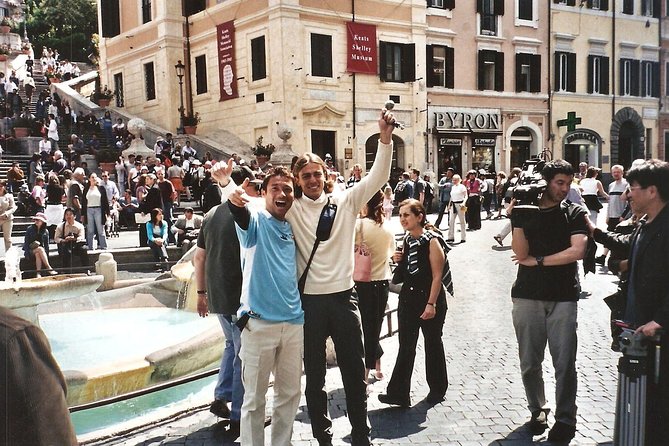
If Rome feels like too much on day one, this style of tour helps. You get a focused walk across the city center rather than bouncing around on your own with a map and guesswork. The big win here is flow: you move from square to street to fountain, then into another square, in an easy rhythm that makes the landmarks easier to remember.
I love that it is a true walking tour, not a “stand here, move along, forget it” experience. And with a private group, your guide can adjust when a corner is crowded or when you want a little more context. You also get hotel pickup, which matters when you are starting your day already tired of logistics.
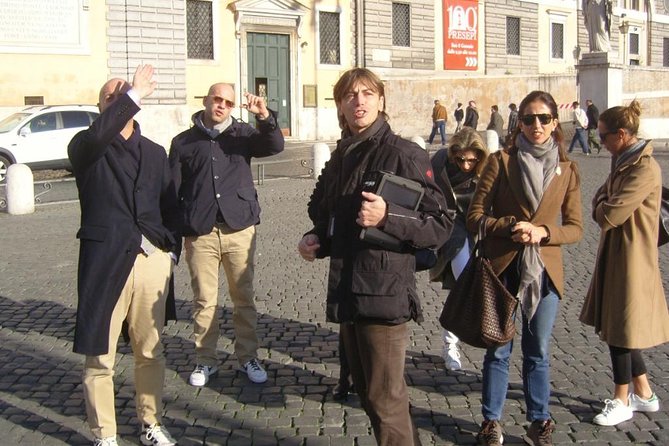
The best guide can make a huge difference in Rome, and the names Paulo and Gaia come up for a reason. Their approach is the same theme: passion and clear city orientation, plus keeping multiple people (even teenagers) engaged with the story behind each stop.
More Private Tours in Rome
- Rome by Golf Cart Private Tour: Beyond the Landmarks
★ 5.0 · 4,361 reviews - Early Morning Vatican, Sistine, St. Peter’s Semi or Private Tour
★ 5.0 · 3,779 reviews - Rome on a Golf Cart Semi-Private Tour Max 6 with Private Option
★ 5.0 · 2,502 reviews - Rome Private Arrival Transfer: Fiumicino Airport to Hotel in Rome
★ 4.5 · 2,492 reviews
Value check: what $229.78 really buys you
At $229.78 per person for about 3 to 4 hours, you are paying for three things: a guide, private time, and hotel pickup. You are not paying for entry fees at most stops, because the tour is built around landmarks that do not require paid admission during your pauses.
The free entrances are not a small detail. When you are doing a half-day walk with several famous places, ticket costs can sneak up fast. Here, the tour keeps most costs off your plate, and it reserves the paid ticket for the one major sight at the end, the Pantheon.
You should also consider the group size cap of 8. If you are traveling with friends or family, this can be a smart use of money because you stay in a manageable group while still getting the personal attention that makes a private tour worth it.
One more value note: you get a mobile ticket and a guided route built for first-time visitors. If you hate spending vacation time decoding directions and historical jargon, this setup is designed to cut that time down.
Getting started with hotel pickup and the Fontane dei Leoni Egizi area
The tour begins at Fontane dei Leoni Egizi, on Via del Teatro di Marcello. Since hotel pickup is included, you should expect the start to feel less like an expedition and more like meeting your guide near your neighborhood. It helps when you are not already positioned in the center.
Once you are at the starting area, you shift into street-level Rome. This matters because Rome is not just big monuments. It is also tight sidewalks, quick conversations, and people doing everyday things between the big photo moments.
If you are picky about timing, wear comfortable shoes from the start. Even though each sight has a short stop window, the total walking time adds up over 3 to 4 hours. In that kind of schedule, good shoes are not a luxury, they are your secret weapon.
Piazza del Popolo: why this “People’s Square” works as a first stop
Piazza del Popolo is a classic opener. The name literally connects to people, and the deeper detail is charming too: the name is tied to poplars that once surrounded the oval square. Designed between 1811 and 1822, it was meant to welcome visitors and pilgrims entering Rome from the north via Via Flaminia.
This is a smart first stop because it gives you a big-picture orientation. You get a recognizable starting frame for the rest of the walk. You also see how central Rome is organized into major axes and squares that feel connected, not random.
The stop length is about 20 minutes, and that is just right for a quick reset. You can scan the geometry, notice the flow of traffic and foot traffic, and let the guide point out what you might otherwise miss.
Practical tip: treat this as your warm-up. Take a moment to get your bearings and decide what you want to photograph before the route starts stacking up more famous stops.
Via del Corso and the Trident street plan
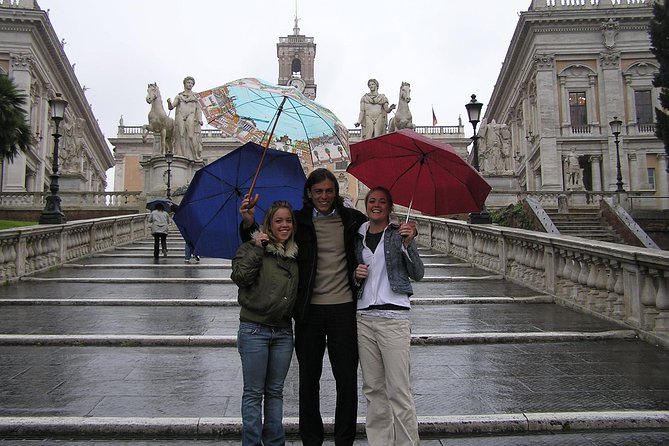
Next comes Via del Corso, the main road artery that links Piazza Venezia to Piazza del Popolo. It is about 1.6 kilometers long and part of the Trident road complex, which means you are walking through one of the city’s key central alignments.
Why is this worth a tour stop? Because you are not just moving between landmarks. You are walking along a road that helps explain how the city’s layout works. Once you understand the road plan, the “random” feeling of central Rome softens a lot.
The tour gives this area about 20 minutes. You can use that time to watch the rhythm of people crossing, browsing, and passing by. It is a reminder that Rome’s famous squares still function as daily public space, not just postcard sets.
If you tend to feel overwhelmed, this stretch is a good breathing moment. You get to move through the center with the guide keeping context in place.
More Walking Tours in Rome
The Spanish Steps to Trevi Fountain: peak names, efficient pacing
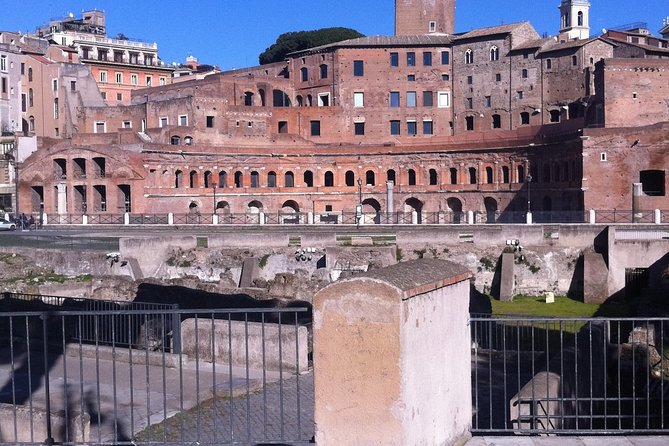
The Spanish Steps sit between Piazza di Spagna and Piazza Trinità dei Monti. The staircase climbs a steep slope, and it ends at the church of Trinità dei Monti, while the bottom area connects to the Spanish Embassy side of the story.
You will also hear the details that make the steps more than a photo. The monument has 135 steps and was built with French diplomat Étienne Gueffier’s bequeathed funds. It linked the Bourbon kings of France patronage at the top with the Spanish Embassy to the Holy See at the bottom. Architects Francesco de Sanctis and Alessandro Specchi shaped the design, too.
Then you move to Trevi Fountain. It is an 18th-century fountain in the Trevi district, designed by Nicola Salvi. Trevi is one of those places where timing and crowding can make or break your experience, so the guided approach helps you get value out of a short stop rather than getting stuck in “just trying to see it” mode.
The stops here are around 20 minutes each, which is exactly why this tour format works for short on time days. You still see the landmark, and you do not lose your whole afternoon to one busy spot.
Fontana del Pantheon and the Pantheon area before the finish
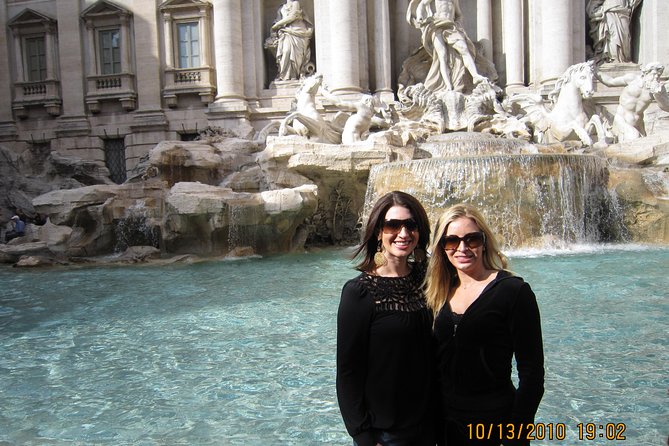
You will pause near the Pantheon area at Fontana del Pantheon. This is a useful “in-between” moment because it builds anticipation without forcing you to buy a ticket too early. You learn the big-picture context, then the tour ends at the Pantheon itself.
The Pantheon is the ancient Rome building dedicated to all past, present, and future divinities. Founded in 27 BC under Marco Vipsanio Agrippa, it sits in the Pigna district in the historic center. Even if you know the famous name, hearing the purpose in plain terms helps you read what you are looking at.
One important detail: Pantheon admission is not included. You will need to plan for that additional ticket when you reach the end.
The stop length around the area is about 30 minutes for the Fontana del Pantheon moment, and then you are dropped off at the Pantheon at the end for about 20 minutes. That structure works well if you want a guide to set context first, then choose your own pace once you are ready to go inside.
Piazza Navona and Fontana dei Quattro Fiumi: where the square feels theatrical
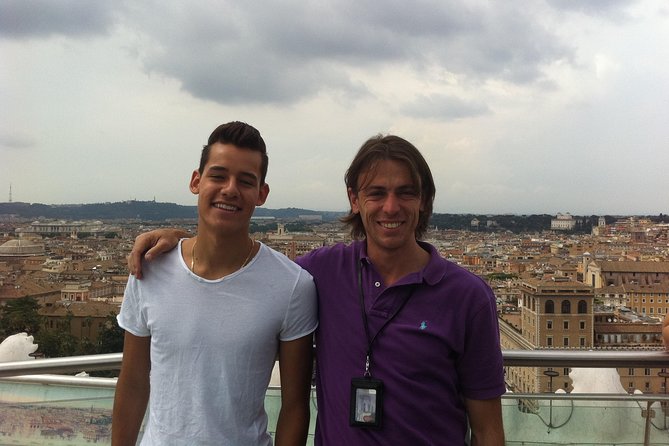
Piazza Navona is one of Rome’s most recognizable monumental squares. It was built in a monumental style by the Pamphili family at the behest of Pope Innocent X. Even without any deep reading, Navona feels like a stage because of how the buildings and open space frame the square.
Then the tour brings you to Fontana dei Quattro Fiumi, commissioned by Pope Innocent X to decorate Piazza Navona. In 1647, Innocent X commissioned Francesco Borromini to design a pipeline that would bring water from the Aqua Virgo to the square. There was also a competition for the fountain’s design, and the pope wanted to recover an obelisk later called Agonale that lay in ruins on the Appia Antica.
That is the kind of story a guide helps you catch. The fountain is not just pretty rockwork, it is tied to water systems, politics, and planning.
You get about 20 minutes here, which is enough to take in the layout and understand why it looks the way it does. If you want to linger, you can always extend your time after the tour, but the planned pacing keeps the day moving.
Piazza della Minerva: Minerva’s name and Santa Maria sopra Minerva
Piazza della Minerva adds a slightly calmer feel after the big square energy. The name comes from an older temple in the same place dedicated to Minerva, with a cult statue now associated with the Vatican.
Santa Maria sopra Minerva sits at the center of the square. It is mentioned in the 8th century by the Anonymous of Einsiedeln as ecclesia S. Mariae in Minervio. It is a nice shift from baroque showpieces to a place where the street atmosphere can feel a bit more grounded.
The stop is about 20 minutes, so you will not get a long religious deep dive. But you do get enough to understand how the area layers over time, Roman temple roots giving way to later sacred spaces.
If you like variety in a single walk, this stop is one of the reasons the route feels more interesting than just repeating the greatest hits.
What 3 to 4 hours means for your schedule and energy
The total time is about 3 to 4 hours. With most stops clocking in around 20 minutes, you are getting a tour that prioritizes coverage and context over long lingering. That can feel perfect if it is your first time in Rome or if you have another plan later the same day.
You should expect to walk between sights. Transportation between sights is not included, and taxi or private transfers are not part of the package. So build your plan around staying in the central zone and being comfortable on foot for half a day.
A private tour also means you can adapt your pace. If one fountain is more crowded than you expected, your guide can help you adjust what you focus on in the time you have. If the group wants photos, you can do it without feeling like you are slowing everyone down.
Food and drinks are not included. Rome walking tours can make you accidentally skip lunch, so plan for a snack break either before or after. And if you are doing the Pantheon ticket at the end, remember you may want water and a little patience in that final stretch.
Should you book this private walking tour of Rome’s squares and fountains?
Book it if you want a smart, efficient route through central Rome with hotel pickup, an English-speaking guide, and a private group cap of 8. This is especially good for first-time visitors who want to hit the big squares and fountains without turning the day into a navigation project.
Do not book it if your main goal is deep museum time or long, uninterrupted sightseeing at one location. The schedule is built for multiple famous stops in a few hours, so the pauses are short. You will see a lot, but you are not meant to camp out.
One more booking tip: it is priced as a premium half-day, so make it count. Go in with comfortable shoes, a basic willingness to walk, and a mindset of learning what each square is doing in the city plan. Done right, you walk away feeling like you understand central Rome, not just like you collected photos.
FAQ
How long is the Private Walking Tour of the Squares and Fountains in Rome?
It runs about 3 to 4 hours.
Is this a private tour?
Yes. It is private, and only your group participates. The maximum group size is 8 people per booking.
What sights are included during the walk?
You’ll visit Piazza del Popolo, Via del Corso, the Spanish Steps, Trevi Fountain, Fontana del Pantheon area, Piazza Navona, Fontana dei Quattro Fiumi, Piazza della Minerva, and you end with the Pantheon.
Are entrance tickets included?
Admission tickets are free for the sights listed during the tour stops. Pantheon admission is not included.
Is hotel pickup included?
Yes, hotel pickup is included.
What language is the tour offered in?
The tour is offered in English.
Do I need tickets in advance?
You will have a mobile ticket. The Pantheon ticket is not included, so you will need to handle that admission separately.
Is transportation between sights included?
No. Transportation between sights is not included, and taxi or private transportation transfers are not included.
Can I cancel and get a refund?
No. This experience is non-refundable and cannot be changed for any reason.
Latest additions from Rome
- Guided Tour Vatican Museums & Sistine Chapel★ 4.1 · 30 reviews
- Exclusive Rome by Night Vespa Tour★ 5.0 · 30 reviews
- Transfer Rome to Airports★ 4.5 · 30 reviews
- Vatican: St.Peter’s Basilica & Dome – Reserved Entry & Tour★ 4.1 · 30 reviews
- Rome street art tour: off the beaten path with a local guide★ 5.0 · 30 reviews
- Tivoli, Hadrians Villa and Villa d’Este, a charming day trip from Rome★ 4.5 · 30 reviews
- Rome Food Tasting with Wine Pairing Italian Authentic Flavors★ 5.0 · 31 reviews
- Inspirational Cooking on the Roman Chef’s Panoramic Terrace★ 5.0 · 30 reviews
Walking Tours in Rome, compared.

Guided Food Walking Tour with Wine in Trastevere
Read our review →
Trastevere & Campo de Fiori Street Food Walking Tour
Read our review →
Paranormal Night Walking Tour & Secret Backstreets
Read our review →
Trastevere Street Food Walking Tour with Local Expert
Read our review →
Guided City Center Evening Sightseeing Walking Tour
Read our review →
Small-Group City Highlights Moonlight Walking Tour
Read our review →
Best of Rome Walking Tour including Trevi Fountain
Read our review →Browse the lists this tour appears in