Reviewed · PRIVATE TOURS IN ROME
Private Tour: Jubilee year Holy Sites of Rome
Relics, churches, and smart routing in one day. I love how this private Jubilee year holy sites tour turns big famous basilicas into personal, story-driven stops, and I also like that you get hotel pickup and drop-off so you spend your energy inside the churches, not in Rome traffic. One thing to plan for is the dress code, you will need knees and shoulders covered or you may be refused entry.
This is a true private format, so you and your party set the pace, ask questions, and get guidance on where to look for the Jubilee-era details tied to each church. Based on past tour leadership, guides such as Massimo (Max), and also Manny, are praised for their clear explanations and for knowing the practical flow of the day.
The day runs about 7 hours starting at 8:00 am, and lunch is on your own budget. If you prefer to wander solo and make your own choices every step of the way, this structured route may feel a bit too intentional.
In This Review
- Key reasons this Jubilee holy-sites day works
- How Jubilee holy sites become easier to appreciate on a private route
- Getting picked up in central Rome and keeping the day stress-free
- Basilica di Santa Maria Maggiore: Mary’s Rome and relic details you will actually recognize
- Basilica di San Praxedis: an ancient titular church near the action
- Basilica of the Holy Cross in Jerusalem: soil from Jerusalem, the relic set, and Thomas’s finger
- The Holy Steps (Passionist monastery): Pontius Pilate’s marble steps in one tight visit
- Lunch break: let your guide handle the nearby plan
- Arcibasilica di San Giovanni in Laterano: the cathedral of Rome and the Pope’s former home
- Basilica Papale di San Paolo Fuori le Mura: Constantine-era St. Paul devotion
- Chiesa del Domine Quo Vadis: outside the walls, a short stop that changes the mood
- The value of a private guide who can connect art, faith, and logistics
- Price and what you are really paying for in a 7-hour private tour
- Dress code rules that can save your day from a last-minute problem
- Who this Jubilee holy-sites tour suits best
- Should you book the Jubilee Holy Sites of Rome private tour?
- FAQ
- What is the start time for the tour?
- How long is the private Jubilee holy sites tour?
- Where does pickup happen?
- What is included in the price?
- Is admission included for all stops?
- Is lunch included?
- Are there any dress code requirements?
- Is this tour refundable if plans change?
Key reasons this Jubilee holy-sites day works
- Relics explained in context, so you know what you are looking at instead of just seeing displays
- Stays private the whole time, you do not get mixed into a larger group rhythm
- Hotel pickup and drop-off keeps the day calm, especially in the morning
- An efficient circuit of major sites, including basilicas tied to Mary, the Holy Cross, and St. Paul
- Short-but-memorable stops like Chiesa del Domine Quo Vadis outside the walls
- A guide who handles the details, including where to look and how to move between churches
How Jubilee holy sites become easier to appreciate on a private route
Rome’s Christian sites are layered, and that is the point. The trick is that without context, you can feel like you are just clocking buildings. On this private tour, the guide’s job is to connect what you see to why it matters, so each stop lands with meaning.
I also like the value of doing this as a private experience in a city where crowds and congestion can drain your time. You get a dedicated driver and vehicle for the day, which helps you stay on schedule and makes the route feel smoother.
The route is built around major churches that people associate with the Jubilee year, including places connected to Mary, the Holy Cross, the Passion, and key apostles. That focus is helpful if your goal is depth, not just a checklist.
More Private Tours in Rome
- Rome by Golf Cart Private Tour: Beyond the Landmarks
★ 5.0 · 4,361 reviews - Early Morning Vatican, Sistine, St. Peter’s Semi or Private Tour
★ 5.0 · 3,779 reviews - Rome on a Golf Cart Semi-Private Tour Max 6 with Private Option
★ 5.0 · 2,502 reviews - Rome Private Arrival Transfer: Fiumicino Airport to Hotel in Rome
★ 4.5 · 2,492 reviews
Getting picked up in central Rome and keeping the day stress-free
Your tour starts at 8:00 am, and you are picked up directly from your hotel or apartment in central Rome. If you are coming from the airport, you meet your driver after you collect bags and walk outside baggage claim to find them with a sign and your name.
That pickup detail sounds small, but it matters. Morning is when you want a quiet start, and getting placed into the car early helps you avoid the wandering and waiting that can happen when you rely on public transport or taxis.
The day stays focused because you are not managing directions between sites. Your guide also helps with the flow once you are on foot, which is where you usually lose time when you travel independently.
Basilica di Santa Maria Maggiore: Mary’s Rome and relic details you will actually recognize
Your first stop is the Patriarchal Basilica of St. Mary Major, Basilica di Santa Maria Maggiore, described as the first Roman church dedicated to the Virgin Mary. Even if you have seen other churches in Rome, this one often hits differently because of the specific Jubilee connections your guide will point out.
You will spend about 30 minutes here, and admission is listed as free. Inside, pay attention to the final resting place of Pope Paul V and to the image of the Blessed Mary and Child attributed to St. Luke. Your guide also shares the story of planks of wood believed to be part of Jesus’ crib, which is the kind of detail that is easy to miss when you are moving quickly on your own.
Why this stop is so valuable: it is not just a devotional stop, it is a site where art, tradition, and relic storytelling overlap. If you like to understand what you are looking at, this is one of the best starts for the whole day.
Basilica di San Praxedis: an ancient titular church near the action

Next you visit the Basilica of Saint Praxedis, an ancient titular church near St. Mary Major. This is the kind of stop that can feel like a bonus if you were only planning to see the biggest names.
The value here is pace and contrast. After a flagship basilica, you get a more focused church setting where your guide can slow things down and explain what makes this place significant.
You should think of this stop as part of building the map in your mind. Once you understand how these churches relate to the Jubilee-era themes, the later sites click faster.
Basilica of the Holy Cross in Jerusalem: soil from Jerusalem, the relic set, and Thomas’s finger
One of the core stops is Basilica di Santa Croce in Gerusalemme (the Basilica of the Holy Cross in Jerusalem). This is the only basilica in Rome mentioned here as one that shows relics and evidence tied to the life of Jesus.
You will spend about 30 minutes, and admission is free. The guide frames the story around St. Helen, mother of Emperor Constantine the Great, who brought soil from Jerusalem so the church could be built on it. Then you get a relic-centered tour of the church’s most famous items, including a small piece of the Holy Cross, a Nail, thorns from the Crown, and Doubting Thomas’ finger.
This is also where having a guide makes a real difference. Relics are sometimes presented as if they are just objects behind glass. With the right explanation, you understand why specific traditions developed around particular items.
If you are the type who wants to know what the church is claiming, and why that claim matters within Christian tradition, this stop is a highlight.
Another shape for the same afternoon in Rome:
The Holy Steps (Passionist monastery): Pontius Pilate’s marble steps in one tight visit
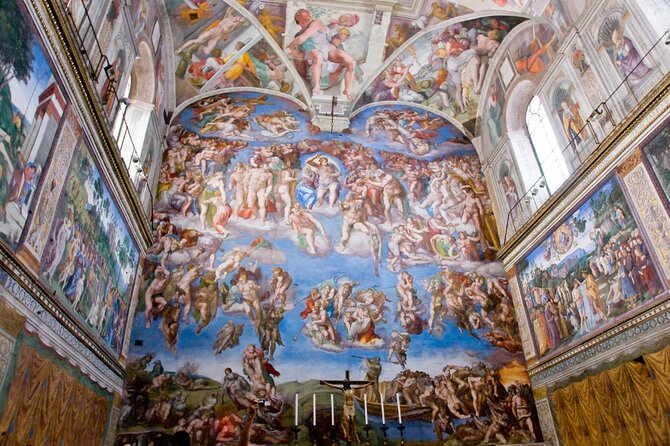
The tour includes the Holy Steps, located in a Passionist monastery. Inside, you will find marble steps to the palace of Pontius Pilate.
Your time at this stop depends on how your group moves, but this is not typically a long, sightseeing-only stop. It feels like a moment of ritual and reflection, even if you are not sure exactly what to do at first.
What I like about this inclusion is balance. After relic-heavy sites, you get a different kind of Christian memory, one connected to the Passion story. It changes the tone of the day, so later basilicas feel less like repeats and more like a full narrative.
Lunch break: let your guide handle the nearby plan
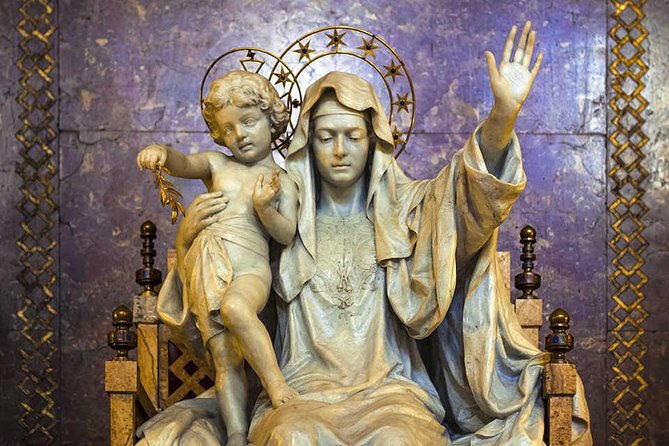
After the morning churches, you take a lunch break. Lunch is not included, and your guide will either suggest a nearby restaurant or you can choose your own place.
This is a good moment to reset your feet and your expectations. You will be visiting multiple churches, and even if most admissions are free, you still need a real break so you can keep paying attention.
If you want the smoothest day, choose your lunch based on proximity to your next stop. With private touring, your time is worth more than a long lunch detour.
Arcibasilica di San Giovanni in Laterano: the cathedral of Rome and the Pope’s former home
In the afternoon, you visit the Arcibasilica di San Giovanni in Laterano, the cathedral of Rome and described here as the former house of the Pope, with a major role in the triumph of Christianity.
You will spend about 30 minutes here. Admission is listed as not included, so plan for any entry fee you may need for this stop.
This is one of the biggest “institutional” sites of the day. If you have been thinking of Rome’s holy places mostly as pilgrimage targets, this stop helps you understand the church as a seat of governance and authority, not just a spiritual destination.
Practical tip: because entry can require tickets, come in with patience. The guide helps you manage the flow so you do not lose time once you arrive.
Basilica Papale di San Paolo Fuori le Mura: Constantine-era St. Paul devotion
Next you go to Basilica Papale di San Paolo Fuori le Mura, dedicated to St. Paul the apostle. This basilica is described as having been made by Constantine about 1700 years ago, which is part of what gives it weight.
You will spend about 30 minutes, and admission is listed as free. This is a stop where the scale and legacy can overwhelm you if you do not know where to look. Your guide’s job is to point you toward the key elements so your visit feels targeted.
Why it matters: St. Paul is central to early Christian history, and Rome’s relationship with Paul is one of the reasons the city became a major pilgrimage destination long before the Jubilee concept.
Chiesa del Domine Quo Vadis: outside the walls, a short stop that changes the mood
The itinerary also includes Chiesa del Domine Quo Vadis, a small corner outside the walls of Rome. It is listed as a 15-minute stop, and admission is free.
This is the kind of location that often gets skipped by visitors focused only on the “big names.” Here, the short visit works because it gives you a change of scenery and a different emotional tone.
If your feet need a breather, this stop delivers meaning without demanding a long time commitment.
The value of a private guide who can connect art, faith, and logistics
One of the most praised aspects of this experience is the guide. In past tours, Massimo (Max) and Manny are repeatedly singled out for knowledge that goes beyond surface level, along with a friendly, patient approach.
What you should care about as a visitor is not just that the guide is well informed. It is how they use that knowledge while you are standing in front of things. You get instruction on where to look for Jubilee relics and artifacts, and you are not left guessing what matters most in each church.
The guide also handles the practical side of the day. People have praised how efficiently guides navigate parking and get you to the best, most convenient places to enter.
And while the core tour is the core tour, you may find that your guide is willing to help with smart add-ons if time allows. One past guide helped coordinate an English-speaking catacombs visit and even supported attending Mass at Maria Maggiore on short notice. That kind of flexibility can make a good day feel memorable.
Price and what you are really paying for in a 7-hour private tour
This tour costs $488.71 per person for about 7 hours. That is not cheap, but private tours in Rome tend to price like a combination of time, vehicle access, and expert interpretation.
Here is what you do get, per the tour details:
- Hotel pickup and drop-off
- A private vehicle
- A private English-speaking driver
- Admission is free for the stops where it is listed as free
- Food and drinks are not included
A key value point is that multiple sites listed here have free admission on the basic stop times. You are not paying only for entry fees. You are paying for a day managed so you can focus on interpretation and flow.
The one admission exception called out in the details is St. John Lateran, where admission is listed as not included. So it is smart to budget for that extra cost so the price feels transparent.
If you are traveling as a couple, or a small group that wants a guided narrative, the cost can feel more reasonable than piecing together tickets, transport, and self-guided research.
Dress code rules that can save your day from a last-minute problem
Church entrances here follow strict dress guidance. For this tour, you need to dress so that knees and shoulders are covered for both men and women. No shorts or sleeveless tops are allowed.
This is not a suggestion. The tour details warn that entry can be refused if you do not meet the requirement.
So plan your outfit like you are visiting a courtroom, not a museum. If you are traveling with layers, bring something that covers your shoulders without adding bulk. Comfortable shoes also matter, because you will be moving between churches and walking short segments in the schedule.
Who this Jubilee holy-sites tour suits best
This tour is a strong fit if you:
- Want a private, guided day rather than a crowded group experience
- Prefer to understand what relics and artworks mean, not just photograph them
- Like structured routes, especially for churches you might not know how to prioritize
- Are visiting Rome during a Jubilee year and want the holy sites connected with that theme
It is also a good choice if you are short on time. Seven hours can sound like enough time to do everything, but in Rome it disappears quickly. A prepared route helps you see major sites without wasting half a day figuring out logistics.
If you want free-form wandering and you enjoy building your own story from guidebooks, you might feel boxed in. But even then, you could still love the experience because the guide helps you see the places you would otherwise miss.
Should you book the Jubilee Holy Sites of Rome private tour?
I think this is an easy yes if you want a meaningful Jubilee-focused day with minimal stress. The strongest reasons to book are the private format, hotel pickup and drop-off, and the fact that the guide role is consistently praised for explaining what matters and helping you find it.
I would hesitate only if you hate structure, you have trouble with dress code rules, or you are on a very tight budget for a single paid day. Otherwise, it is a thoughtful way to see major Roman holy sites without turning your trip into a rushed checklist.
If you book, wear the right clothes from the start, plan for lunch on your own, and come ready with questions. This tour rewards curiosity, and with the right guide you leave the churches understanding the stories behind what you saw.
FAQ
What is the start time for the tour?
The tour start time is listed as 8:00 am.
How long is the private Jubilee holy sites tour?
The duration is listed as approximately 7 hours.
Where does pickup happen?
You are picked up directly from your hotel or apartment in central Rome. If you are coming from the airport, you meet your driver after collecting bags outside baggage claim with a sign.
What is included in the price?
The price includes hotel pickup and drop-off, a private vehicle, and a private English-speaking driver.
Is admission included for all stops?
Admission is listed as free for some basilicas and churches, but admission for Arcibasilica di San Giovanni in Laterano is listed as not included.
Is lunch included?
No. Food and drinks are not included. Your guide will suggest a nearby restaurant or you can choose your own.
Are there any dress code requirements?
Yes. Knees and shoulders must be covered for both men and women. Shorts and sleeveless tops are not allowed, and entry may be refused if you do not comply.
Is this tour refundable if plans change?
The experience is listed as non-refundable and cannot be changed for any reason. If you cancel, the amount you paid will not be refunded.
Latest additions from Rome
- Vatican City: St. Peter’s Basilica and Papal Tombs Guided Tour★ 4.0 · 8 reviews
- Vatican City: Museums & Sistine Chapel Tour with St. Peter’s★ 3.1 · 8 reviews
- Rome: Angels and Demons Private Tour with Transfers★ 5.0 · 8 reviews
- Colosseum, Palatine and Forum tour with virtual guide★ 5.0 · 8 reviews
- Sistine Chapel @ its best! First time slot Vatican Museums access★ 5.0 · 8 reviews
- Private Vatican In Depth 5-Hour Tour – Skip The Line★ 4.5 · 8 reviews
- Vespa Rental in Rome★ 4.0 · 8 reviews
- VIP Yacht Escape from Rome to Naples Island Gems Ischia & Procida★ 5.0 · 8 reviews
Private Tours in Rome, compared.
Rome by Golf Cart Private Tour: Beyond the Landmarks
Read our review →
Early Morning Vatican, Sistine, St. Peter’s Semi or Private Tour
Read our review →
Rome on a Golf Cart Semi-Private Tour Max 6 with Private Option
Read our review →
Rome Private Arrival Transfer: Fiumicino Airport to Hotel in Rome
Read our review →
Rome Highlights by Golf Cart Private Tour
Read our review →
Private Vatican Highlights Guided Tour with Sistine Chapel
Read our review →
Private Vatican Museums and St. Peter’s Basilica Early Bird Tour
Read our review →