
Reviewed · MUSEUMS
Leonardo da Vinci Museum: the Universal Genius and His Works
Leonardo’s inventions feel surprisingly modern. I like the life-size, touchable machine replicas and the way 3D holograms and videomapping make the mechanics click. The one catch is simple: if you skip the audio guide, you may breeze through and miss details that connect the dots.
This is an easy, low-pressure museum visit in central Rome, with admission priced at about $10.81 and a typical visit time around 45 minutes to 1 hour (with a minimum of 40 minutes suggested). It’s also the kind of place you can do even on a packed day, because it is set up for all ages and designed for hands-on learning, not museum endurance.
Before you go, keep one practical note in mind. There are multiple Leonardo da Vinci related attractions in Rome, so double-check you are headed to Piazza della Cancelleria 1 for this one, then plan to arrive with enough buffer time so you are not hunting around when you could be touching a gear assembly.
In This Review
- Key Points You’ll Care About
- Inside Il Genio le Invenzioni: What the 45 to 60 Minutes Feels Like
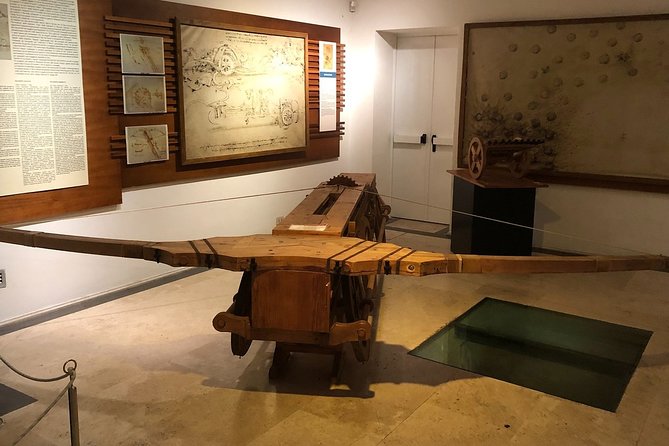
- Stop 1 at Piazza della Cancelleria 1: Touching More Than 65 Full-Scale Replicas
- 3D Holograms and Videomapping: Why the Multimedia Works
- The Underground Pond Finale: Aulo Irzio’s Tomb (43 BC)
- Audio Guides: Worth It, Especially for English Speakers
- Price and Value: Is $10.81 a Good Deal?
- Location and Timing: Piazza della Cancelleria 1, Opening Hours, and Smooth Entry
- Who Should Book This Leonardo Da Vinci Exhibition Ticket
- Should You Book It? My Honest Recommendation
- FAQ
- Is the Leonardo da Vinci exhibition ticket mobile?
- How long does the visit take?
- Are audio guides included in the price?
- What languages are available for the audio guide?
- Where is the exhibition located?
- What are the opening hours?
- Can children visit?
- What is the cancellation policy?
Key Points You’ll Care About
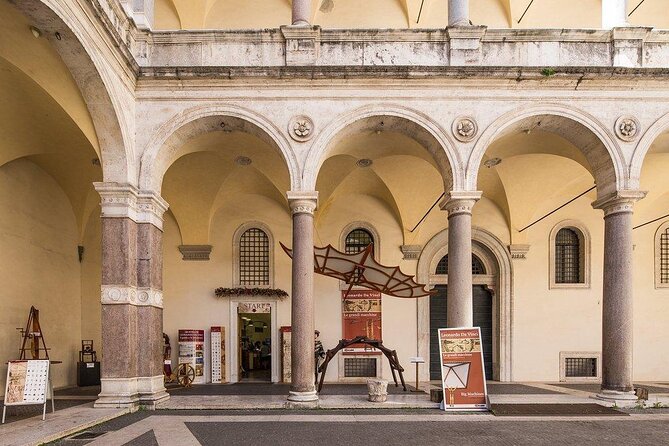
- Over 65 full-scale reproductions of Leonardo’s machine drawings, many you can physically try
- 3D holograms and videomapping that help you understand how the inventions worked
- An underground pond and the tomb of Aulo Irzio (43 BC) as the final surprise
- Audio guides are extra (€3.00), but available in many languages including English
- A tight time window: plan for 40 minutes minimum, up to about 1 hour
Inside Il Genio le Invenzioni: What the 45 to 60 Minutes Feels Like
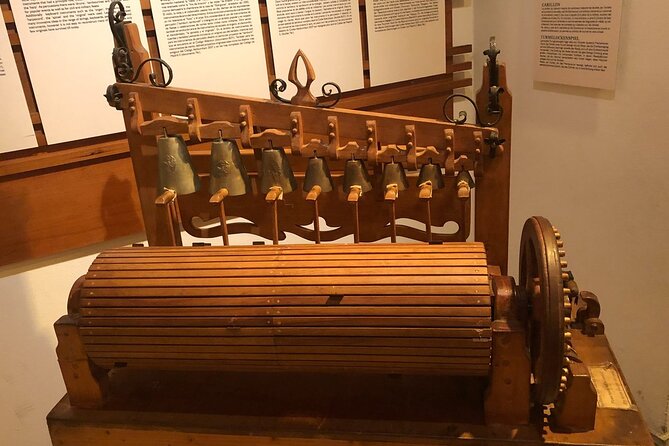
This exhibition is built for a quick but complete loop. From the moment you enter, the pace is active: you are looking at drawings, then watching how they function, then moving your hands to test replicas. That hands-on flow is exactly why this place works for both adults and kids. You do not have to be a scholar of Renaissance engineering to get value.
Most visits land between 45 minutes and 1 hour, and the museum sets a minimum of 40 minutes needed to really see what is there. If you arrive when you are already rushed, you might end up skipping sections you intended to see. I recommend treating it like a focused stop, not a “just passing by” photo stop.
The most important thing to understand is the format. This is not about rare originals. It is about showing you Leonardo’s ideas through replicas, multimedia explanations, and interactive components. If you love the moment when a concept becomes something you can grasp, you are in the right place.
Also, it is a smart choice when the weather is annoying. You are indoors, and the content is varied enough to keep attention even when you do not feel like sightseeing for hours.
Other Roman collections with a shorter wait:
- Vatican Museums, Sistine Chapel & St. Peter’s Basilica Tour
★ 4.3 · 73,970 reviews - Vatican Museums, Sistine Chapel & St Peter’s Basilica Guided Tour
★ 4.5 · 39,149 reviews - Rome: Vatican Museums, Sistine Chapel and Basilica Tour
★ 4.3 · 16,039 reviews - Vatican Museums & Sistine Chapel Skip-the-Line Entry Ticket
★ 4.4 · 13,838 reviews
Stop 1 at Piazza della Cancelleria 1: Touching More Than 65 Full-Scale Replicas
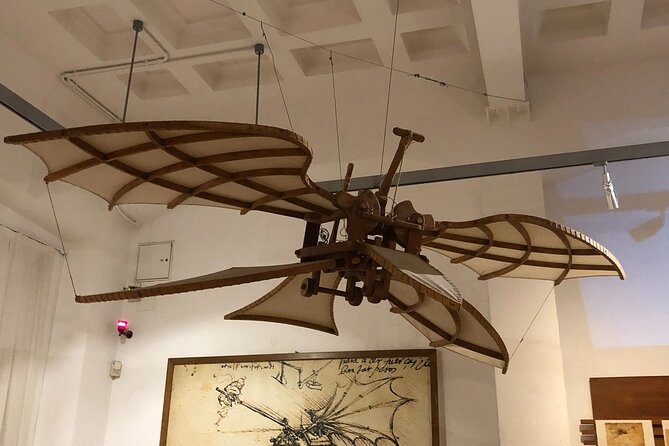
The main draw here is the sheer volume of machine reproductions. You will find more than 65 reproductions presented at real-life scale, based on Leonardo’s drawings of machines. That scale matters. A small model can hint at a mechanism, but it is harder to understand how things move when you cannot judge the size.
What you can expect during this part of the exhibition is a steady rotation of “see it, then try it.” The museum is designed so that you are not stuck staring through glass the whole time. You can touch and attempt many of the interactive machines, which is a huge part of the experience.
From the way the exhibition is described, it is also meant to cover more than engineering alone. You get a sense of Leonardo as artist, engineer, and craftsman, because the machines are paired with context that shows why these ideas mattered. Even if you are not into technical details, you will likely recognize the influence of designs that relate to everyday technology and materials.
Potential consideration: since so much is interactive, you may feel a little pressure to move along when other visitors are trying out the same mechanisms. It is not a huge crowd-squeeze experience, but it is still a hands-on museum, so expect shared space at the most popular stations.
3D Holograms and Videomapping: Why the Multimedia Works
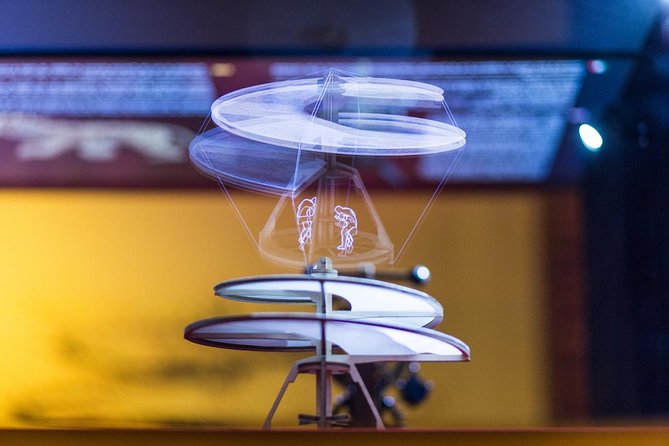
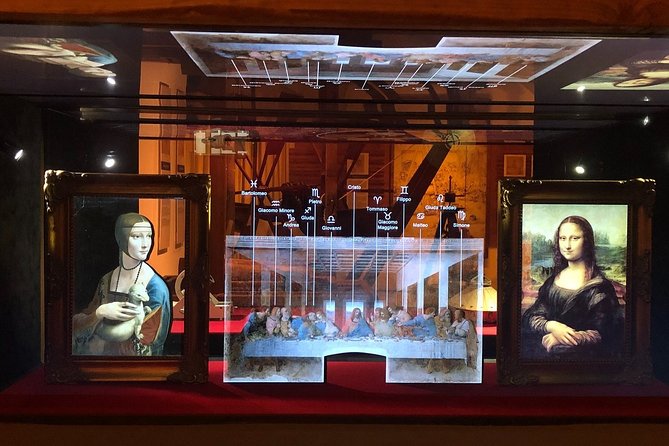
A big reason people enjoy this exhibit is that it does not rely on replicas alone. The exhibition uses holograms in 3D and videomapping to explain how the inventions function. This is where Leonardo stops being just a name and turns into a set of working principles.
These multimedia elements help you make sense of what you might otherwise interpret as “cool-looking machinery.” When you can see the motion in 3D and then connect it to what you can do with the replica, you get that Aha feeling. It is especially helpful if you are traveling with kids, because it keeps the attention moving without needing a long lecture.
There is also a timing benefit. Multimedia takes the guesswork out of what to pay attention to next. Without it, interactive exhibits can feel random, like you are pressing buttons with no payoff. With it, you get context quickly, and your hands-on attempts become meaningful.
One practical tip: give yourself permission to slow down at the stations that have both touch components and screens or holograms. The most satisfying learning happens when you do both within a single stop, not when you treat it as two separate experiences.
The Underground Pond Finale: Aulo Irzio’s Tomb (43 BC)
Near the end of the exhibition, you get a surprise that feels different from the rest. The museum includes a hidden treasure: an underground pond where you can see the tomb of Aulo Irzio, dating to 43 BC.
This ending matters for two reasons. First, it breaks the pattern. You go from machines and holograms to a quieter, historical moment that feels like you found something you were not expecting. Second, it gives the whole visit a “Rome factor.” You are not only learning about Leonardo; you are also experiencing the layers of the city in the same stop.
The description makes it sound like the tomb is visible from within the underground pond setting. That mix of modern exhibition design with an ancient detail is exactly the kind of moment that turns a short museum visit into a memory you will still talk about later.
If you are thinking of doing this exhibition at the end of a busy day, that underground finale is one reason to not rush the beginning. You want enough time left to reach the end without cutting it off early.
Audio Guides: Worth It, Especially for English Speakers
Audio guides are not included in the base admission. They are available at the entrance for €3.00 per person. The museum lists a lot of languages for the rental, including English, plus Italian, Spanish, French, German, Portuguese, Russian, Dutch, Romanian, Polish, and Hebrew.
Here is my practical take: audio is what keeps the visit from feeling like you are just moving from gadget to gadget. One note that comes up in feedback is that without audio, some people felt they moved through the exhibition quickly. If you like understanding what you are touching, the audio guide is one of the easiest add-ons you can make.
If you do get the English audio, treat it like a pacing tool. It helps you decide where to pause, what mechanism matters, and how the story of Leonardo’s thinking connects across rooms. In other words, it turns a short visit into a more complete one.
Potential consideration: since the audio costs extra and is only available for rental on arrival, you should plan your timing. Arrive with enough time to pick up the device, then settle in. If you arrive close to your next appointment, you might feel rushed both by the pickup and the start.
Another shape for the same afternoon in Rome:

Price and Value: Is $10.81 a Good Deal?
At roughly $10.81 per person, this ticket price is positioned as a value play for a central-city museum that runs about 45 minutes to 1 hour. The value question comes down to what you want from museums.
If you want a long, marble-and-masters kind of experience, this may not feel like enough time. But if you like interactive exhibits, this is a bargain. The exhibition is packed with working concepts, tactile stations, and multimedia explanations. You are getting more than passive viewing.
Now, there is the audio guide cost to factor in. The base ticket does not include it, and audio is €3.00 per person at the entrance. Still, adding audio usually turns a quick visit into one where you remember why the machines are important. If you read carefully as you go, you might do fine without audio. If you want the context, plan for it.
Also consider timing. The experience is booked on average about 18 days in advance, which is a hint that if you are visiting during peak travel periods, you will be glad you reserved ahead.
Overall, I think the best way to judge this price is simple: pay for the ticket if you want hands-on Leonardo. Add the audio if you want the story, not just the machines.
Location and Timing: Piazza della Cancelleria 1, Opening Hours, and Smooth Entry
The address is Piazza della Cancelleria 1, and the location is described as being near public transportation, which helps if you are pairing it with nearby sights like Piazza Navona or the Campo di Fiori area.
Opening hours are listed for Monday to Friday, 9:30 AM to 7:00 PM, and the exhibition is closed on December 25th. That Monday through Friday window is the kind of detail that can surprise you if your Rome plan is built around weekends. If you are visiting on a weekend, check timing carefully before you go, since the hours provided here are only for weekdays.
The tour confirmation happens at booking, and tickets are mobile, which is convenient. One less pleasant scenario to avoid is wasting energy getting to the wrong Leonardo-related stop. There are multiple Leonardo da Vinci museums and exhibitions in Rome, so make sure your navigation is pinned to this one, Piazza della Cancelleria 1.
Practical tip: show up ready to start. Because the museum is short, you do not want to lose time at the beginning. If you are the kind of traveler who likes to grab coffee, take photos, and then stroll in calmly, do that first at a spot nearby, then head straight to the entrance for the exhibit.
Who Should Book This Leonardo Da Vinci Exhibition Ticket
This experience fits best if you want interactive learning in a compact format. I think it is especially good for:
- Families: children must be accompanied by an adult, and the hands-on stations and multimedia usually hold attention
- Curious travelers who like mechanisms: ball bearings, flight concepts, bridges, and other machine ideas are the kind of topics people remember
- People who want a quieter, focused stop: this is not a long line museum marathon, it is a structured walkthrough with active stations
It might be less ideal if you want original masterpieces in a grand gallery setting. This exhibition focuses on reproductions, holograms, and interactive models. That is the point, but it changes the type of satisfaction you get.
Also consider your learning style. If you enjoy reading and looking closely, you can still enjoy the exhibition without audio. If you like guided context to connect the dots, the audio guide is a smart spend.
Should You Book It? My Honest Recommendation
Book it if you want a short, high-value Rome stop that mixes touchable Leonardo machine replicas with 3D explanations and a memorable underground finale. It is priced fairly for the time you spend, and the format supports both quick understanding and hands-on fun.
Skip it or reconsider if you only want original artifacts, or if you are the type who needs a slower, longer museum experience. This is compact by design, with a 40 minute minimum and typically 45 to 60 minutes to enjoy it properly.
If your schedule is tight, this is one of those places that gives you a lot per hour. Just make sure you have the right address, arrive during the weekday hours listed, and budget a little extra if you want the audio guide.
FAQ
Is the Leonardo da Vinci exhibition ticket mobile?
Yes. The ticket is provided as a mobile ticket, and you receive confirmation at the time of booking.
How long does the visit take?
Plan for about 45 minutes to 1 hour. The museum also notes that a minimum of 40 minutes is needed to visit.
Are audio guides included in the price?
No. Audio guides are not included. You can rent them at the entrance for €3.00 per person.
What languages are available for the audio guide?
Audio guides are available at the entrance in Italian, Spanish, English, French, German, Portuguese, Russian, Dutch, Romanian, Polish, and Hebrew.
Where is the exhibition located?
The address is Piazza della Cancelleria 1 in Rome.
What are the opening hours?
The provided hours are Monday through Friday, 9:30 AM to 7:00 PM. The exhibition is closed on December 25th.
Can children visit?
Yes, most people can participate. Children must be accompanied by an adult.
What is the cancellation policy?
Free cancellation is available. You can cancel up to 24 hours in advance for a full refund. If you cancel less than 24 hours before the start time, the amount paid is not refunded.
Latest additions from Rome
- Guided Tour Vatican Museums & Sistine Chapel★ 4.1 · 30 reviews
- Exclusive Rome by Night Vespa Tour★ 5.0 · 30 reviews
- Transfer Rome to Airports★ 4.5 · 30 reviews
- Vatican: St.Peter’s Basilica & Dome – Reserved Entry & Tour★ 4.1 · 30 reviews
- Rome street art tour: off the beaten path with a local guide★ 5.0 · 30 reviews
- Tivoli, Hadrians Villa and Villa d’Este, a charming day trip from Rome★ 4.5 · 30 reviews
- Rome Food Tasting with Wine Pairing Italian Authentic Flavors★ 5.0 · 31 reviews
- Inspirational Cooking on the Roman Chef’s Panoramic Terrace★ 5.0 · 30 reviews
Museums, compared.

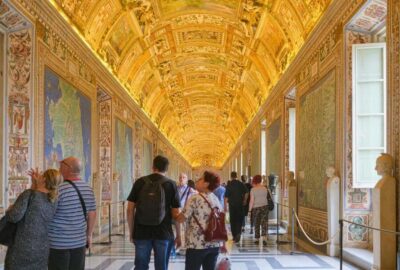
Vatican Museums, Sistine Chapel & St. Peter’s Basilica Tour
Read our review →
Vatican Museums, Sistine Chapel & St Peter’s Basilica Guided Tour
Read our review →
Vatican Museums, Sistine Chapel and Basilica Tour
Read our review →
Vatican Museums & Sistine Chapel Skip-the-Line Entry Ticket
Read our review →
Vatican Museums, Sistine Chapel & Basilica Tour
Read our review →
Vatican Museums & Sistine Chapel Skip-The-Line Ticket
Read our review →